
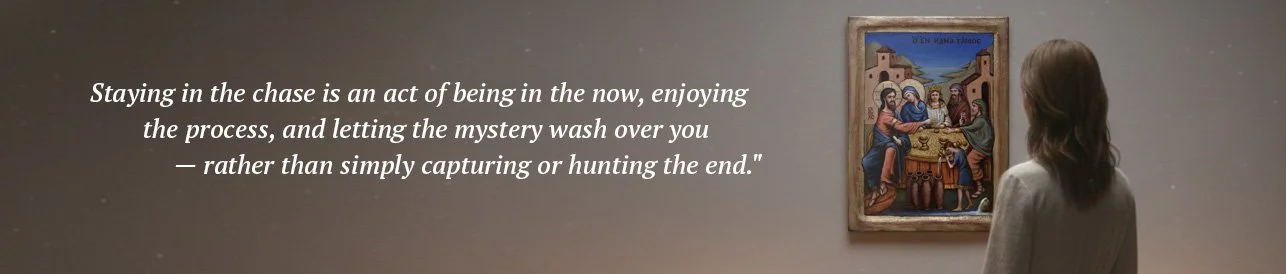
Why Do We Need a Liturgy of Art?
The Explanation is a Key You Don’t Need
As an artist, I am often met with the same urgent request: "Tell me what this means." Viewers frequently approach a work of art as if it were a locked room, assuming someone else is holding the key. In our culture, there is a relentless pressure to "solve" the image—to decode the mystery so we can categorize it and move on.
But when we demand a literal explanation, we close the door on the Spirit. The Liturgy of Art is an invitation to put down the "GPS system" of the analytical mind and instead become a patient observer, walking the visual terrain with God as your guide.
From Manipulated Consumer to Active Observer
Because this shift is more difficult than it seems, the Liturgy acts as a discipline that helps us move from Manipulated Consumer to Active Observer. In our modern visual culture, we are rarely "viewers"; we are consumers. We live in an aggressive landscape of imagery designed to prod, manipulate, and shout at us. Advertisements demand our desire; social media feeds demand our judgment; news cycles demand our outrage.
Participating in this liturgy is a radical act of resistance. It replaces the "predatory glance" of the consumer with the "holy observation" of the pilgrim. To be an active observer is to:
Refuse Passive Consumption: Adopting a posture of alert, quiet availability.
Create Sanctuary: Standing still instead of rushing toward a quick opinion.
Hear the "Still, Small Voice": Allowing the image to exist on its own terms so God can be heard above the noise.
The Practice: Allowing Mystery to Wash Over Us
For those shaped by the Anglican tradition, this feels deeply familiar. Much like the rhythmic invitation of the Table, the Liturgy of Art is not a cerebral exercise; it is a sacramental one. By moving through the Four Movements of the Observer, we transform the act of seeing into an act of visual listening:
Behold (Visio): We begin by simply looking. We notice colors, light, and subject—waiting upon the artwork much like a rabbit waits in the brush.
Reflect (Meditatio): We ask where the eye is drawn, allowing the "Visual Word" to intersect with our current life.
Pray (Oratio): We turn our observations into a conversation with God, offering our "Amen" to whatever He is revealing.
Rest (Contemplatio): We cease the "chase" and enjoy the "capture," sitting in stillness with the Divine.
Becoming a Patient Observer
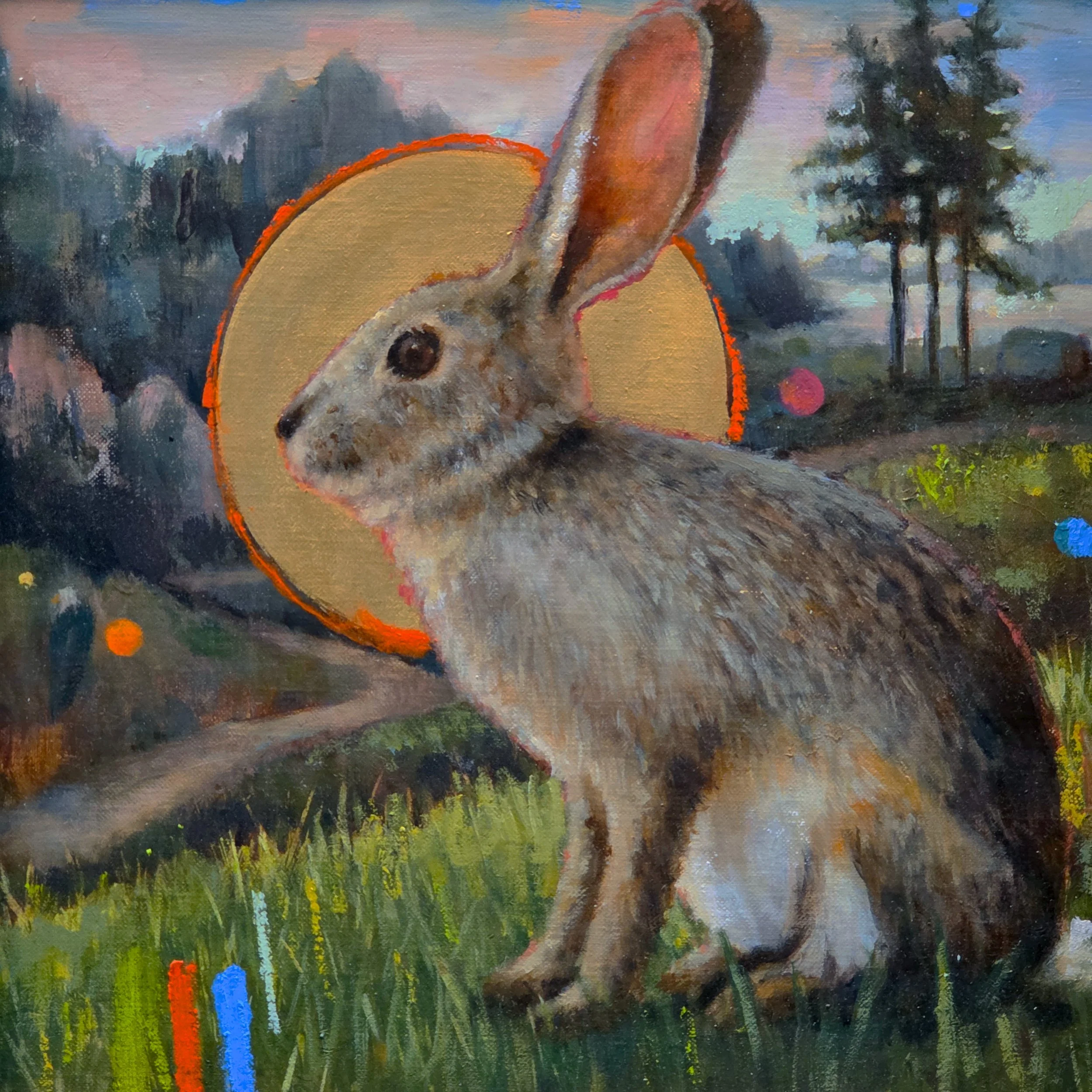
Participating in the Liturgy of Art is to practice "holy waiting." It is a posture of humility that says: "I do not need to master this image; I am willing to be mastered by the Beauty it reflects."
"Staying in the chase is an act of being in the now, enjoying the process, and letting the mystery wash over you—rather than simply capturing or hunting the end." — Joshua
By quieting the demand for an immediate answer, we stop talking long enough to hear what God has been waiting to say. We move from being "hunters" of meaning to "participants" in grace. our hearts.