
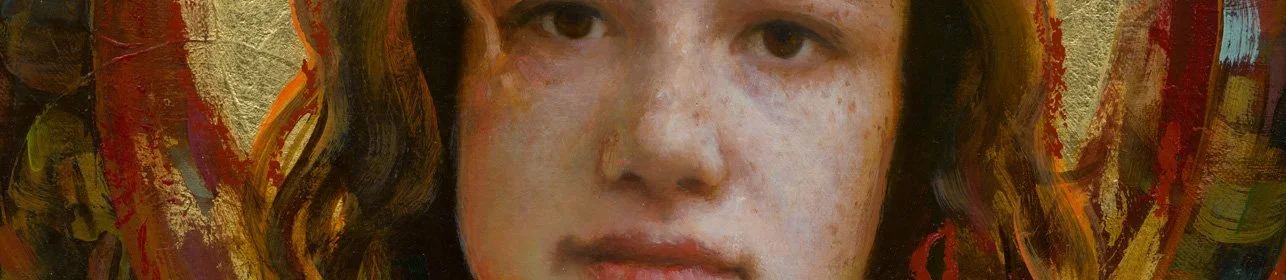
What is a Liturgy of Art?
The Work of the People
The word Liturgy comes from the Greek leitourgia, meaning "the work of the people." In the Anglican tradition, liturgy is not a passive performance to be watched, but a communal rhythm to be entered. It is a set of "holy habits" that provides a track for the soul to run on when our own words fail. A Liturgy of Art takes this principle into the visual realm. It is a rhythmic, visual listening—a formal, repeatable discipline of engaging with beauty to encounter the Divine.
The Anglican Perspective
What separates a Liturgy of Art from a generic spiritual exercise is its grounding in the Anglican Way. We believe that because we are physical beings, God often uses physical means to reach us. “Matter Matters.” This practice is built upon three primary pillars:
Incarnational: We believe that since the Word became Flesh, the visible world has become a pathway back to the Creator. Beauty is not a distraction; it is a signpost.
Liturgical: Much like a candle or an altar, artwork acts as a "focal point." It gathers our wandering thoughts and centers them on the mystery of the Gospel.
Contemplative: It follows the specific Anglican call to "read, mark, learn, and inwardly digest." We move beyond "studying" a text with the intellect and begin "beholding" the beauty of God with the heart.
The Shape of the Grace
In our tradition, a Sacrament is an "outward and visible sign of an inward and spiritual grace." While the Liturgy of Art never replaces the unique efficacy of the Sacraments, it mirrors their rhythm. It treats a piece of art as a secondary sign—a physical medium that acts as a window into the sacred.
Just as the Liturgy of the Word prepares us for the Table, the Liturgy of Art prepares our hearts to perceive the Divine through a sacred sequence of four movements:
Behold (Visio): We set aside the analytical mind to notice colors, light, and subject.
Reflect (Meditatio): We ask where the eye rests and what emotions are stirred.
Pray (Oratio): We turn our observations into a direct conversation with God.
Rest (Contemplatio): We cease the "chase" for meaning and simply sit in the presence of the Creator.
Conclusion
Ultimately, this is a discipline that trains our eyes to see the "extraordinary in the ordinary." It reminds us that the artist's work is not a solitary act of expression, but a participation in God’s ongoing creative work. By engaging in this rhythm, we find that we are not just looking at a canvas; we are looking at the incarnate reality of a world held together by Christ. We are not merely observers of paint and shadow, but participants in a sacred conversation
"Late have I loved you, O Beauty ever ancient, ever new, late have I loved you! You were within me, but I was outside, and it was there that I searched for you... You flashed, you shone, and you dispelled my blindness." — Saint Augustine